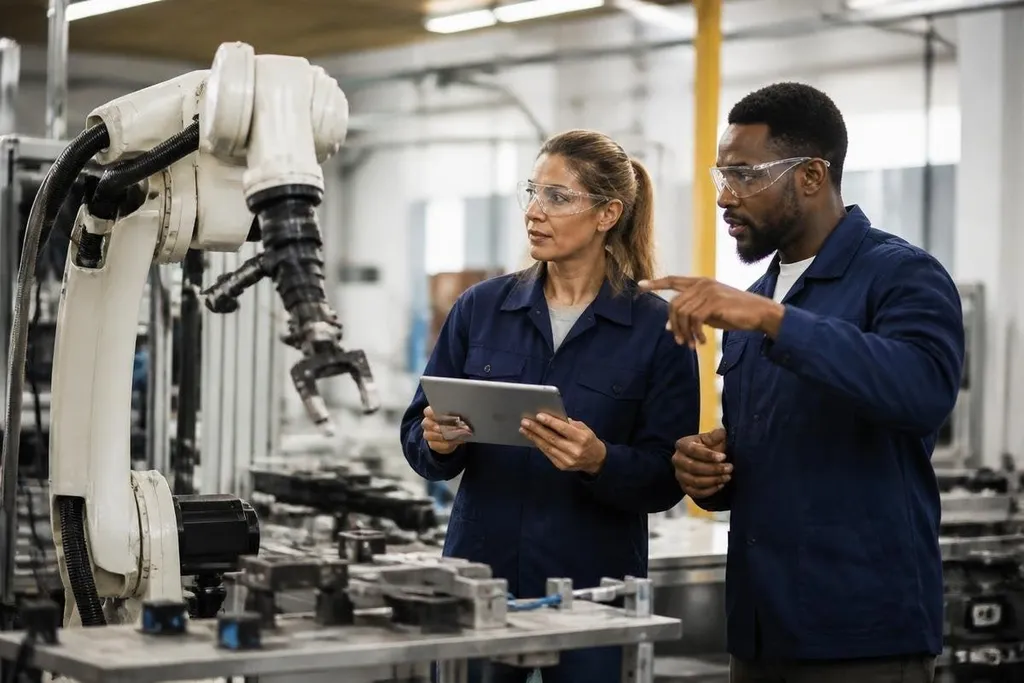
A company can install software or machines faster than a worker can find a new job. Protection from excessive automation should focus on notice, pay, training, and a real say in changes that affect daily work.
This is a workplace policy question, not a demand to freeze every machine. The useful test is simple: does the change remove a task while giving the people who did it a fair path forward?
Quick read
- Give workers notice before an automation plan changes their jobs.
- Share part of the savings when machines remove paid work.
- Keep a human review step for decisions that can cut hours or jobs.
What protection should cover
Protection starts before installation. Workers should receive a plain explanation of which tasks will change, how many roles may be affected, and when the change is expected to happen.
That notice gives people time to ask for training, apply for other roles, or plan for a drop in income. It also gives unions and elected worker representatives a chance to check whether the plan is safe and workable.
Pay matters too. If automation removes a task but leaves a worker with more monitoring, repair, or exception handling, the job may have changed rather than disappeared. A new system can shift work out of sight, where managers may fail to count it.
A fair policy would set out who owns that review. It would name the person or group that checks workload, safety, hours, and job changes after the system starts running.
The case for a worker voice
People who do a job often know where an automated process will fail. They see unusual orders, damaged goods, awkward equipment, and customer problems that a test plan may miss.
That knowledge can help a company fix a system before it causes delays or injuries. It also gives workers a way to challenge a decision when a computer score affects their pay, schedule, or access to work.
Human review should remain in place for decisions with serious effects. A worker should be able to ask for an explanation and speak to a person who can change the result.
Automation can change a job before it removes the job title. A workplace system may set task times or flag errors, changing how a worker is judged. Robot24 can tie that claim to a named system, test site, and human handoff. The next cost question follows: who pays when workers need new training or lose hours?
Who should pay for the change?
Companies gain from automation when a machine cuts labor time, reduces waste, or raises output. Workers may carry the cost through lost hours, weaker pay, or a move to a less secure role.
That split needs a clear rule. A company could fund paid training, keep wages stable during a set learning period, or share part of the savings with workers whose jobs change.
The exact model can differ by industry. A warehouse, hospital, and software company face different risks. The duty to explain the change and protect income can stay the same.
Some companies will say extra rules slow down useful projects. That concern has weight when a new system handles low-risk work and no jobs disappear.
It carries less weight when a company cuts staff without testing the system in normal working conditions.
I'd support protection that gives workers time, information, and a paid route into other work, without blocking every use of automation.
A practical policy checklist
Before a company approves an automation plan, check whether it includes:
- Written notice: which tasks change, which roles may shrink, and when the plan starts.
- Paid training: time to learn the new system during working hours.
- Income protection: a clear period for stable pay after duties change.
- Human review: a named person who can inspect decisions made by software.
- Worker input: a formal way to report safety issues and workload problems.
- Savings sharing: a rule for distributing part of the financial gain when jobs are removed.
These points turn a broad promise into terms a worker can read and use. They also give managers a way to check whether the project works after launch, rather than judging it from a short demonstration.
The open question is how long protection should last after a role changes. A sensible answer will depend on the training time, the local job market, and the amount of work the new system removes. Until those details are set in writing, excessive automation leaves the risk with the worker and the gain with the company.